Social Responsible Care Activities

Policy and Basic Mindset

logo

The UBE Group’s activities are based on the principles of Responsible Care (RC).

RC is a set of principles and practices inviting corporations that handle chemical substances to make voluntary efforts to protect the environment, safety and health at all stages of the process of chemical substance handling—from development, manufacturing, distribution, and use, to final consumption, disposal and recycling. It also entails disclosing the results of these activities and engaging in dialogue and communication with society.

The UBE Group embraces RC principles and implements RC activities across all of its business segments.

The UBE Group implements the following six RC initiatives.

1. Environmental Preservation

Initiatives for the health of the earth’s people and natural environment

2. Process Safety and Disaster Prevention

Initiatives for the prevention of accidents at facilities and mitigation of natural disasters.

3. Occupational Safety and Health

Initiatives for the health and safety of workers.

4. Logistics Safety

Initiatives for the prevention of accidents related to logistics, and for disaster mitigation.

5. Product Stewardship

Disclosure and communication of the properties and handling methods of chemicals, for the safety and health of all persons who handle chemicals including customers, and for conservation of the environment.

6. Publication of Performance Reports and Dialogue with Society

Open reporting of the details and outcomes of activities, and social and community dialogue.

UBE Group Policy for the Environment and Safety

Based on the SLQDC* prioritization framework, the UBE Group is committed to upholding the value of "Prioritize safety in everything we do." We recognize the importance of complying with legal requirements and internal standards related to occupational safety and health, process safety and disaster prevention, and environmental preservation through education and training, and we are committed to demonstrating responsible behavior. Furthermore, the UBE Group promotes communication not only within the Group but also with government authorities and local communities and proactively discloses necessary information to ensure the safety and security of people working within the Group and in local communities.

*SLQDC stands for the order of priorities in manufacturing operations, placing safety first, followed by law (legal, compliance), quality, delivery, and cost

Scope

The UBE Group (UBE Corporation and its consolidated subsidiaries) and companies that fall under the scope of the UBE Group's safety management

Goal

The UBE Group ensures safety and security in the workplace and in local communities by embedding the value of "Prioritize safety in everything we do" into its organizational culture. To achieve this, we will implement the following measures.

  1. We will ensure healthy, safe, and comfortable working conditions for our employees.
  2. We will ensure the safety and security of facilities and maintain stable operations.
  3. We will appropriately monitor emissions of waste and chemical substances and disclose relevant information in a timely and appropriate manner.
  4. We will develop and implement a range of initiatives to promote employee occupational health.

Commitment

  • Occupational accidents: Safety score is 280 or lower each year
  • Process accidents: Number of accidents is zero each year
  • Environmental accidents: Number of accidents is zero each year

*The above criteria are defined by our company

Responsible Departments/Review

The Environment and Safety Department is responsible for overseeing and managing this policy. The status and appropriateness of this policy are assessed during the Strategic Management Meeting (Sustainability Committee) every year, and revisions are made as necessary. If a review is required during the fiscal year, it will be held as appropriate.
Management System

Environmental and Safety Promotion System

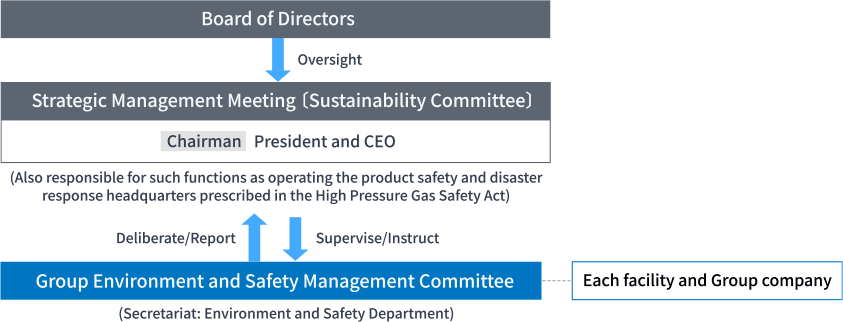
Policies and measures relating to such environmental safety components as occupational safety and health, process safety and disaster prevention, environmental preservation, and environmental issues are key management issues. The President chairs the Strategic Management Meeting (Sustainability Committee), which deliberates and decides on these issues. The meeting also serves as a process safety headquarters as prescribed in a ministerial order relating to high-pressure gas safety (HPGS), discussing and determining important matters relating to process safety at certified sites for high-pressure gas. The Board of Directors monitors the status of these activities.

Structure of Environment and Safety-Related Meetings

Management System Certification Acquisitions

The acquisition of occupational health and safety and environmental management system certifications at the UBE Group can be seen in the following PDFs.

Environmental Safety Measures

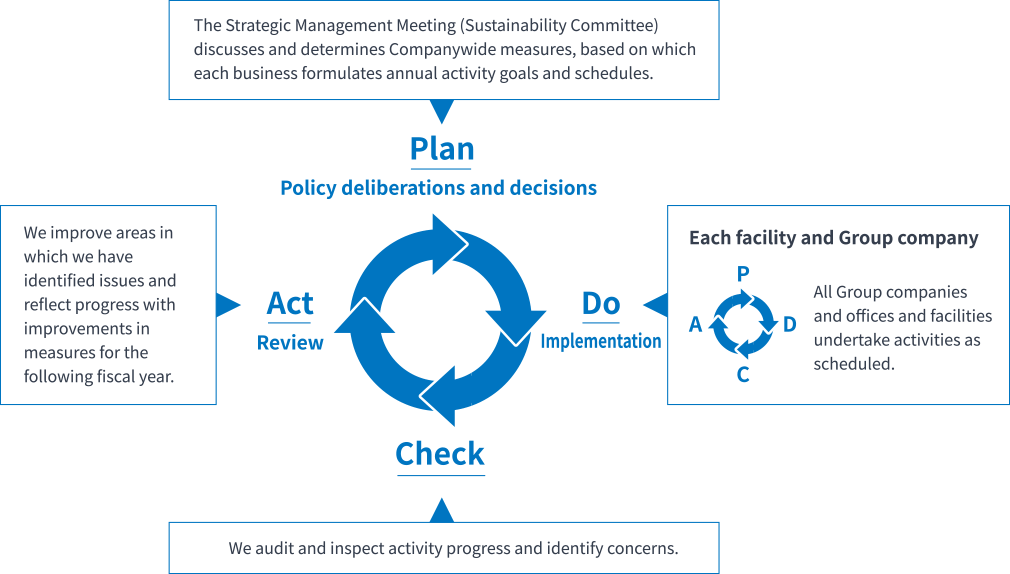
We implement PDCA cycles based on our environmental and safety measures to constantly improve efforts relating to occupational safety and health, process safety and disaster prevention, environmental preservation, and environmental issues.

Annual RC Activities’ PDCA Cycle

Targets and Performance

Indicator Scope FY2024 FY2025 FY2030 (Mid- to Long-Term)
Results Target Target Target
Reduction in emissions of 20 key chemical substances (from fiscal 2010 levels) (KPI) UBE Group (UBE Corporation and consolidated subsidiaries) 38% 70% or more (from fiscal 2010 levels)
Reduction in industrial waste sent to external landfill (from fiscal 2000 levels) (KPI) UBE Group (UBE Corporation and consolidated subsidiaries) 92% 95% or more (from fiscal 2000 levels)

For details, please reference the following pages.

Initiatives

Based on our policies and management system, we are proactively publishing the results of our dialogue and communication with society. UBE’s chemical factories in the Yamaguchi western district, the Sakai/Senboku district, and the Chiba district are regional members of responsible care committees headed by the Japan Chemical Industry Association (JCIA). JCIA member companies conduct responsible care activities covering such topics as environmental conservation, disaster prevention, and occupational safety. We hold dialogues with local communities once every two years in each region to deepen our mutual understanding.

In Ube City, our base of production, we establish important annual exchanges with industries, governments, academia, and citizens, and in years when community dialogue is not undertaken in the Yamaguchi western district, we hold an RC Regional Dialogue Conference in the Ube district.

We will continue to conduct RC activities while focusing on dialogue with local communities to ensure continued co-existence with these groups and mutual growth.

Results

Responsible Care Regional Dialogue Meetings (Fiscal 2024)

  • photo
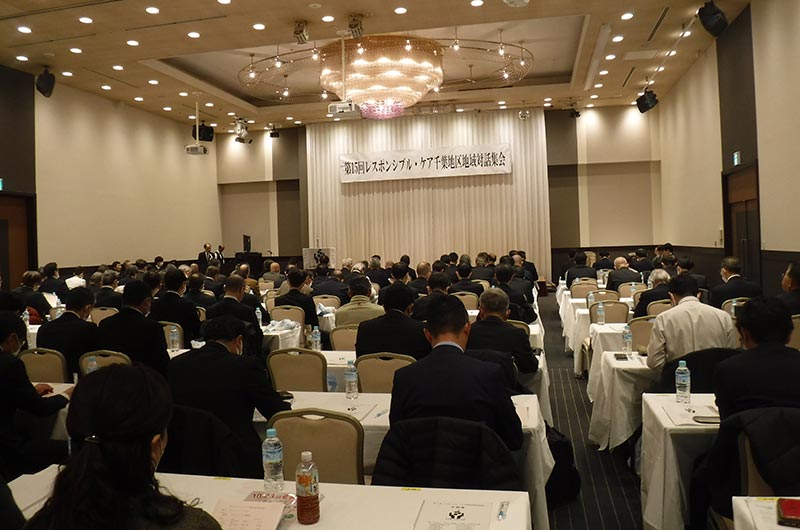
    15th Responsible Care Chiba District Regional Dialogue Meeting
  • photo
    UBE Elastomer Director and Factory Manager Nagata
15th Responsible Care Chiba District Regional Dialogue Meeting (January 28, 2025)

This was the first in-person meeting held in six years, with meetings having been conducted via correspondence during the COVID-19 pandemic. 144 people, including 29 local residents, attended and participated in a lively discussion with our representatives who explained our SDG-related initiatives for corporations and governments and worked to communicate our efforts to promote the realization of the SDGs.

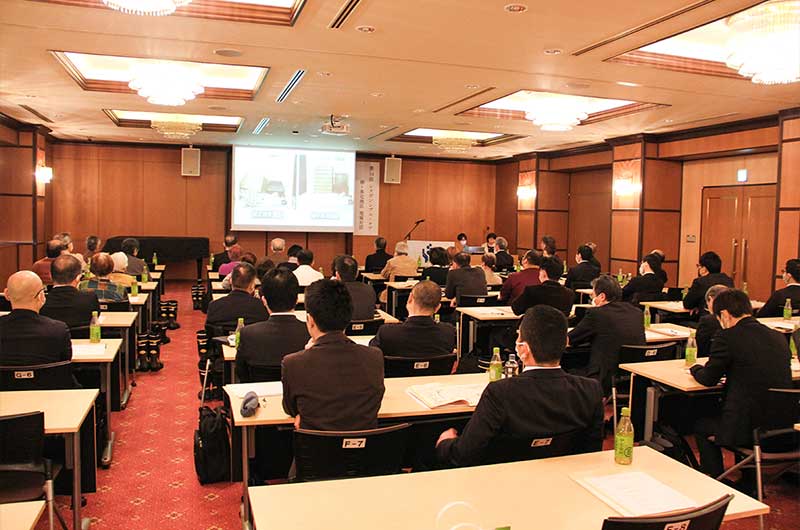
18th Ube District Responsible Care Regional Dialogue Meeting (November 9, 2024)

As with the meeting in the Chiba district, this was our first in-person meeting in six years. This RC Regional Dialogue Meeting in the Ube district included frank exchanges of opinions on regional environmental issues among corporations, governments, and local residents, including reducing waste, conserving aquatic environments, and reducing CO2 emissions. Each corporation explained their initiatives regarding such issues as improving recycling rates and fuel transitions, while local residents had their interest drawn by everyday wastewater and trash separation issues as we joined together in reinforcing our desire to work cooperatively to create sustainable communities.

Responsible Care Report

In 2005 and after, the Responsible Care Report was included in the CSR Report. Since 2018, it has been part of the new Integrated Report.

*PDF links marked will open in a new window.